
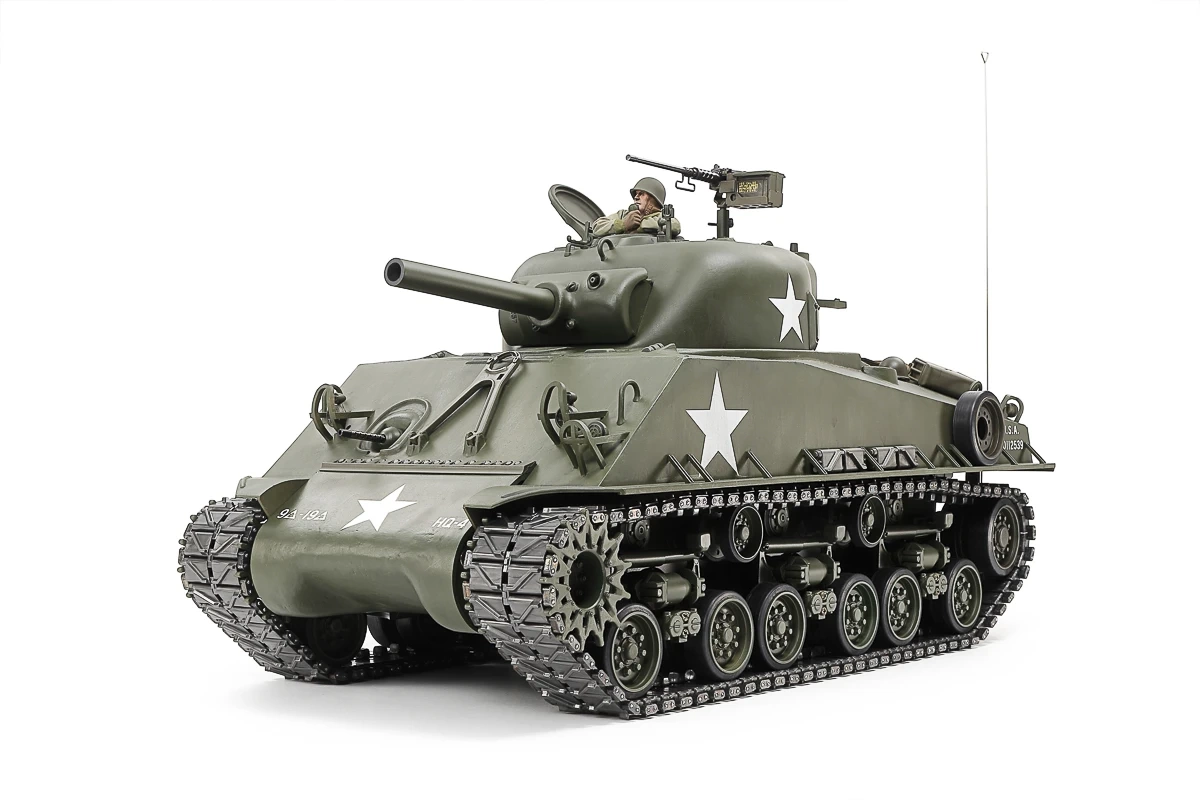
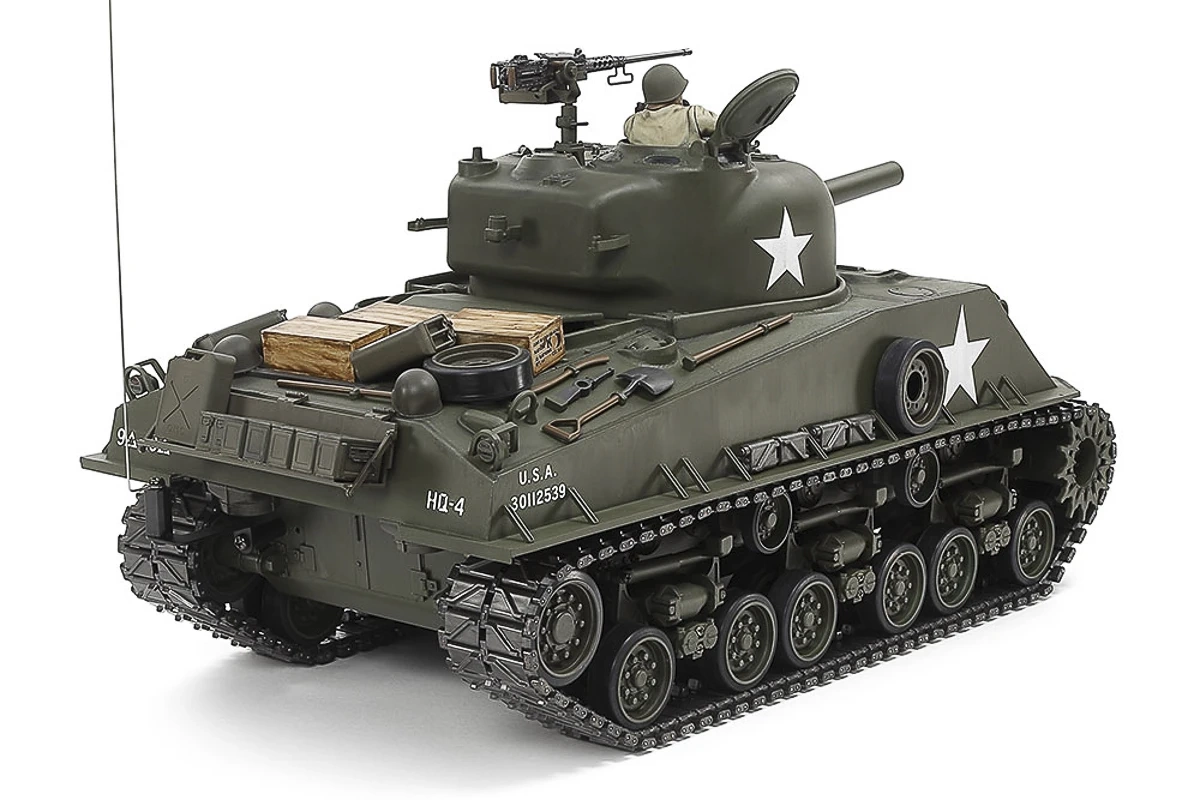
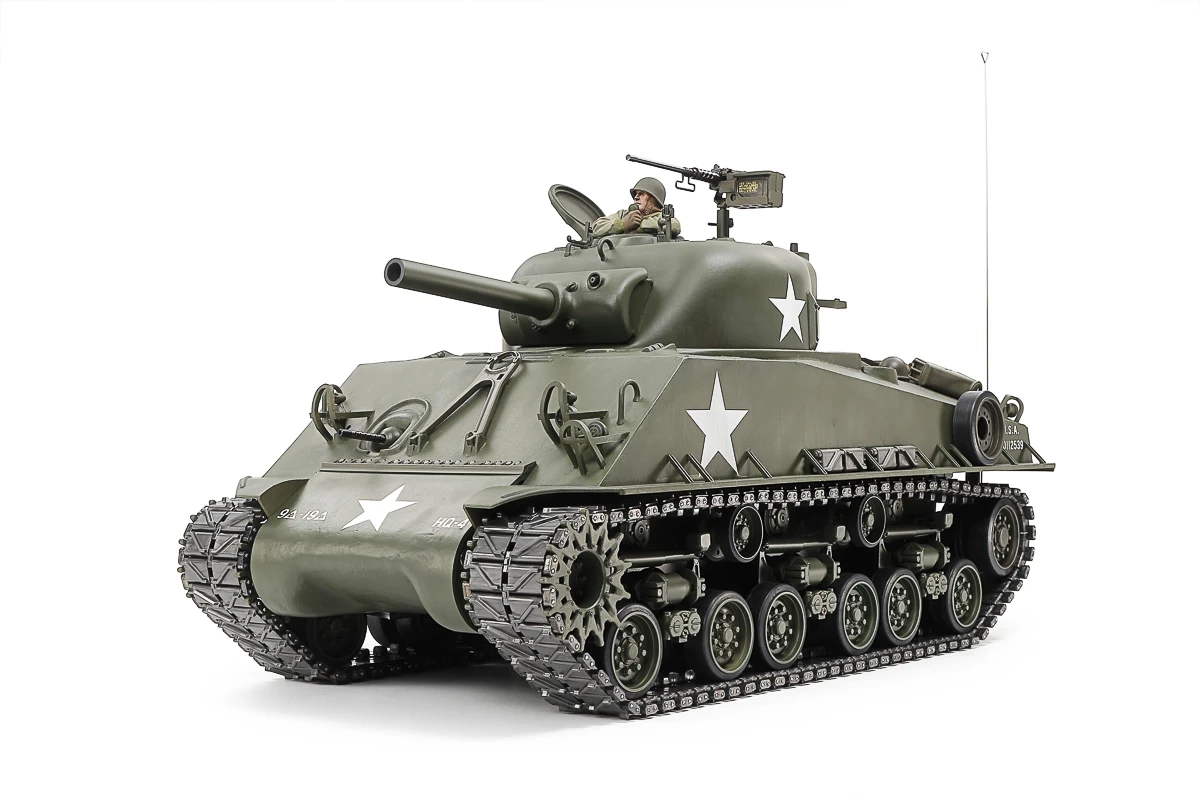
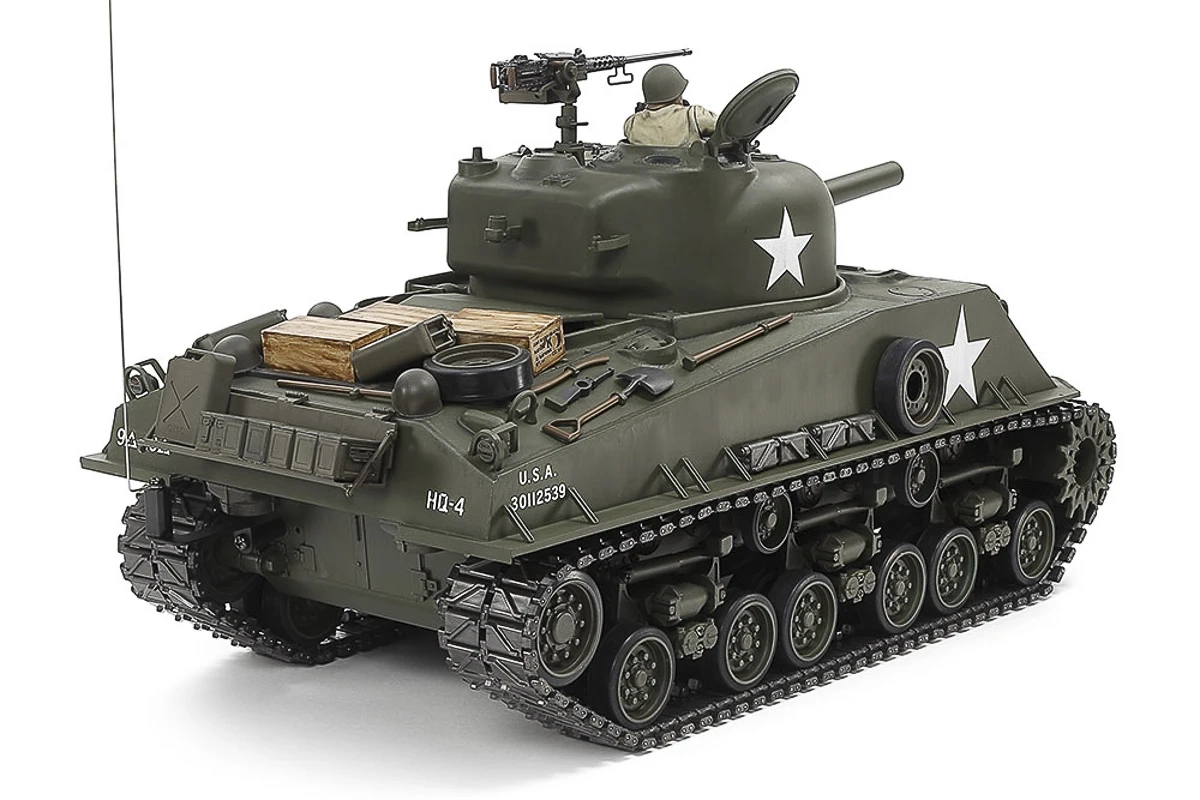
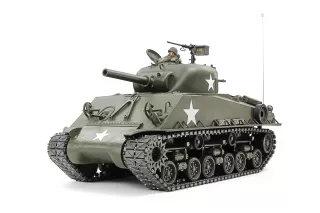
1/16 R/C M4 Sherman 105mm Howitzer (Mechanical Steering System)
Needless to say, the 1/16 R/C M4 Sherman 105mm Howitzer is our first R/C model kit released in 1974.
Now, we are delighted to announce the updated version of Item 56014 1/16 R/C M4 Sherman 105mm Howitzer with a new gearbox which uses one Type 540 motor (two Type 380 motors in the original kit) which recreates the controlled differential steering system of the actual tank.
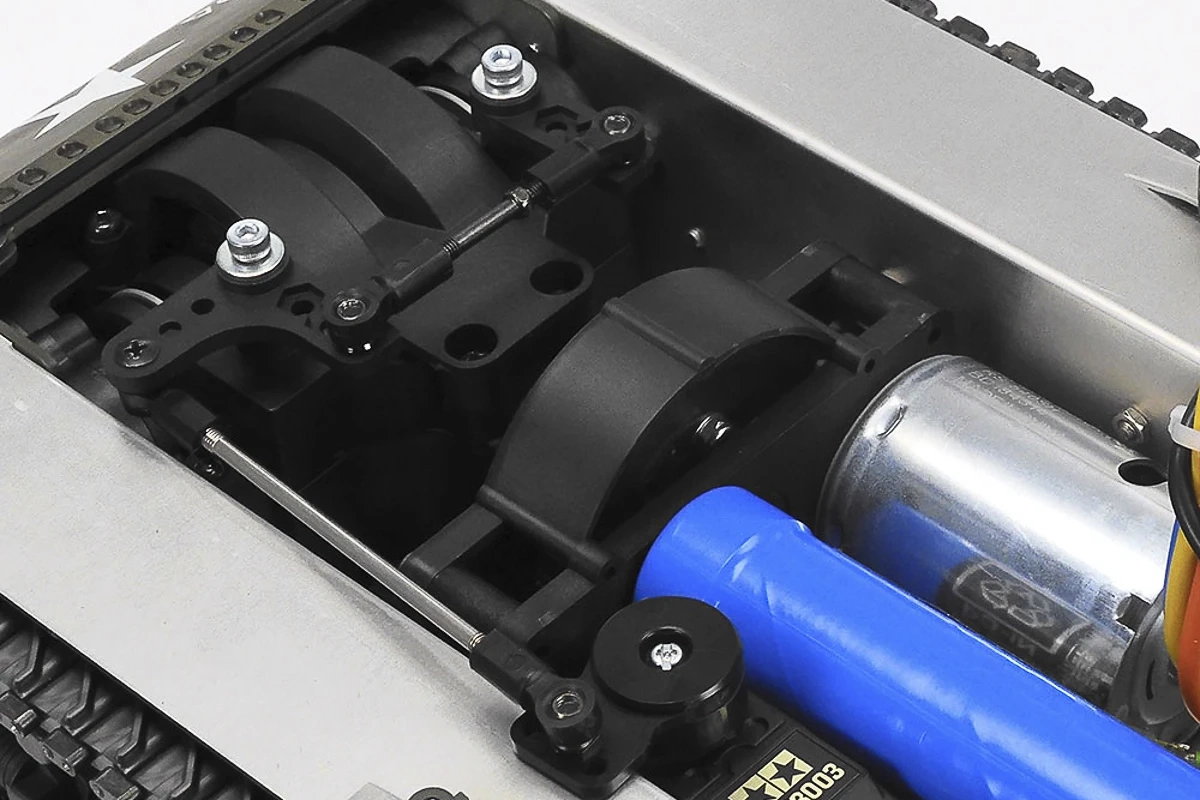
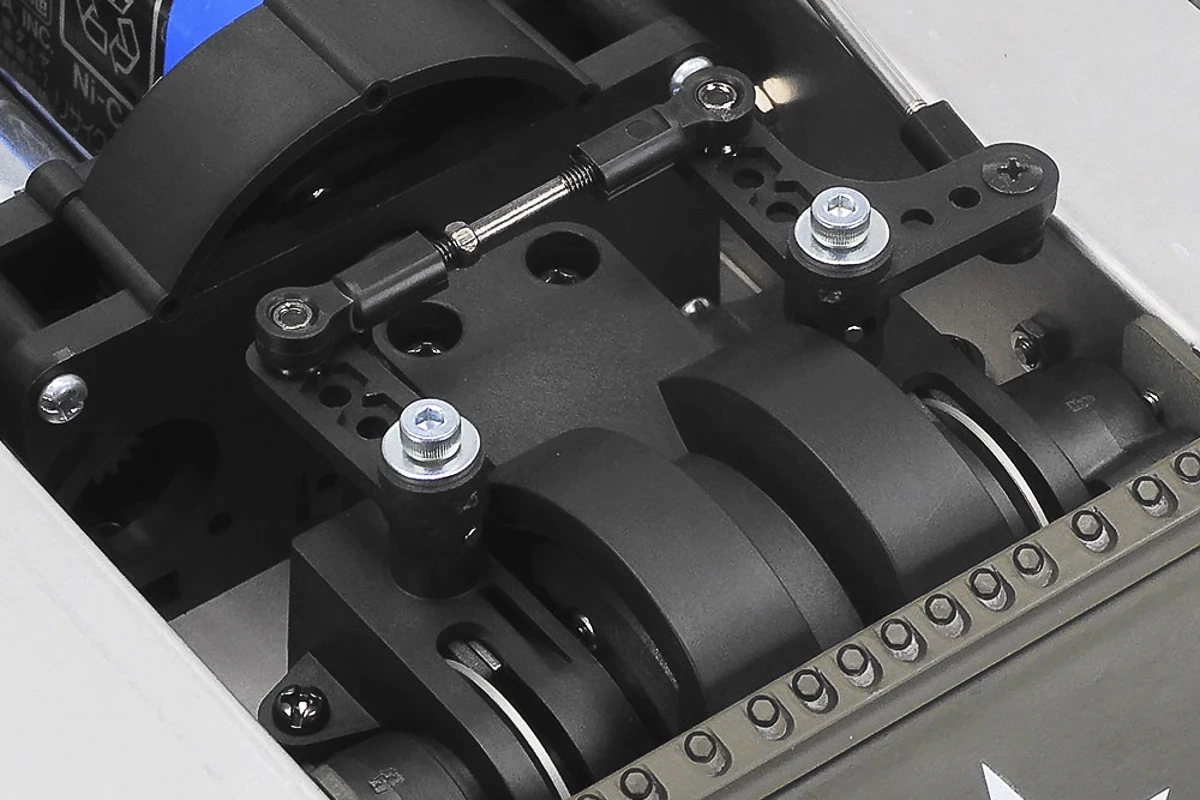
Generally speaking, tanks used the clutch-brake steering system – the power is disconnected from the side of turning direction with sprocket brakes and the tank turns by making differential rotations between right and left tracks. On the other hand, the M4 Sherman employed the controlled differential steering system which allows smooth turning by changing rotation speeds of right and left tracks with differential gear without disconnecting the power.
While sprocket brake still works, the brake completely stops during turnings, and this system limits drive loss and brake overheating. During WWII, most American tanks featured this steering system. Enjoy the feeling of using the steering system from the actual tank, on our legendary R/C tank.
The Sherman tank was a staple of the Allied effort in WWII, with a total of about 50,000 vehicles produced, among which were a host of different variants such as the M4 Sherman 105mm Howitzer, a variant used in fire support. The M4 hull featured rolled steel plates, and it employed a 9-cylinder air-cooled radial engine in the rear which powered the front sprockets via a 5-speed transmission with reverse; the 105mm gun fired howitzer rounds, smoke rounds and incendiary ammunition.
The late production vehicle had horizontal vertical spring suspension (HVSS) and 840 units were produced, providing infantry support and taking part in assaults on enemy strongpoints from Europe to the Pacific Theater.
M4 Sherman 105mm Howitzer Tech Spec Images
 |  |  |
The compact, rather tall form of this Sherman was thanks to its use of a 9-cylinder radial engine.
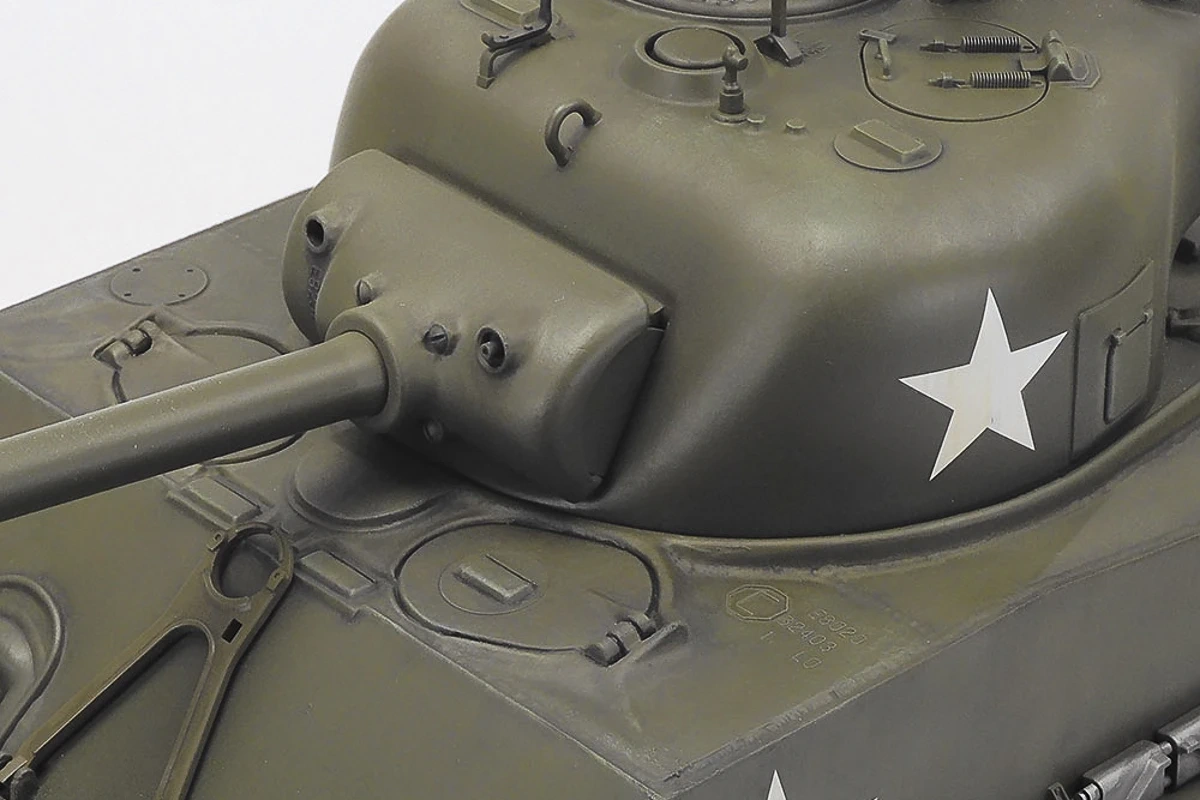
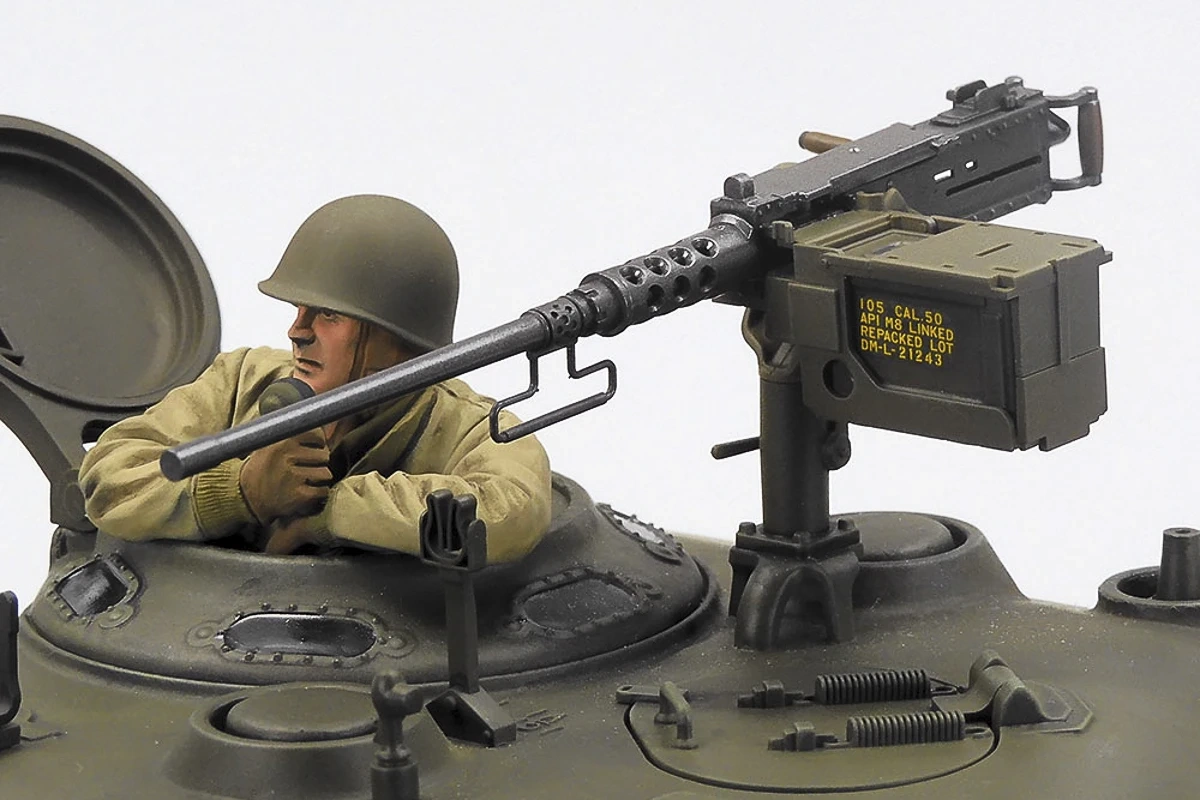
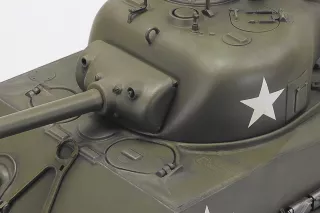
| A close up on the turret and its realistic depiction of cast metal surfaces. The loader"s hatch (turret left) is a moving part, and the commander"s hatch on the cupola can be assembled open or closed.
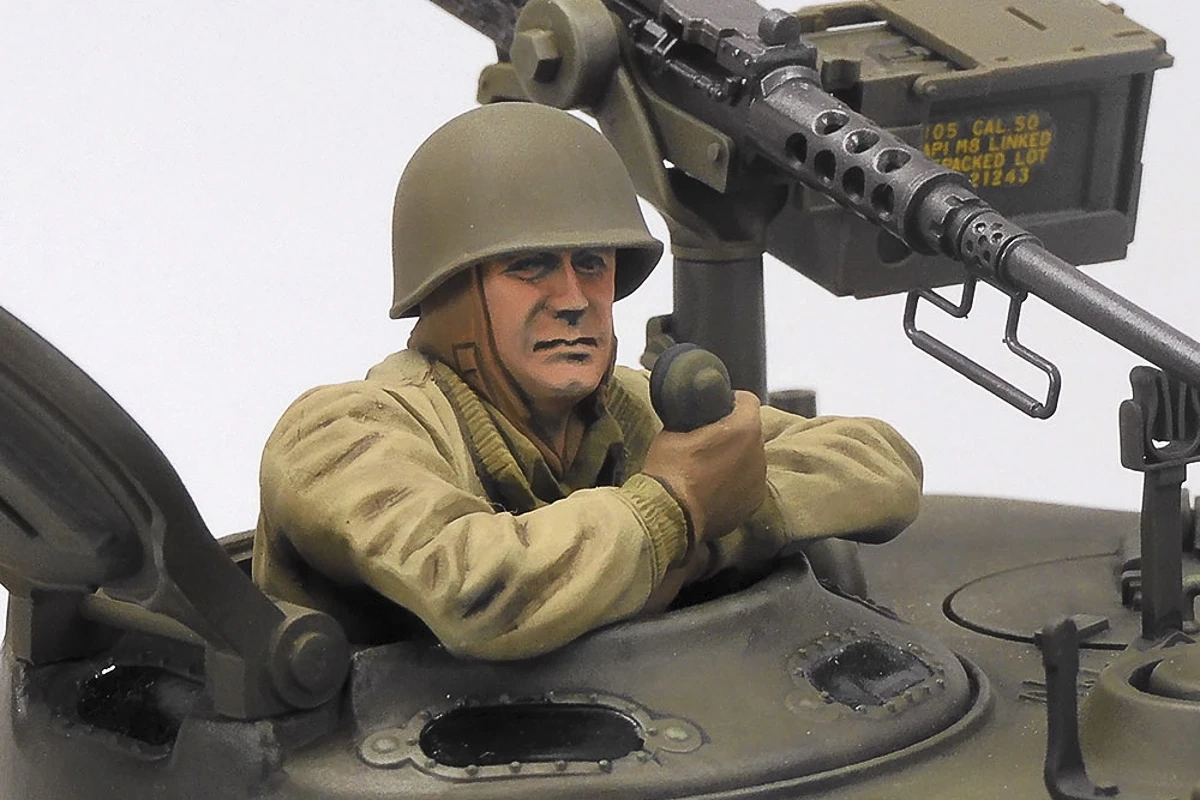
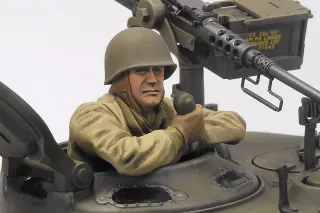
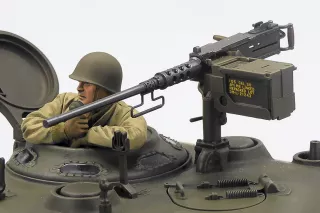
| The detailed M2 heavy machine gun even has a separately molded ammunition case.
|
 |  |  |
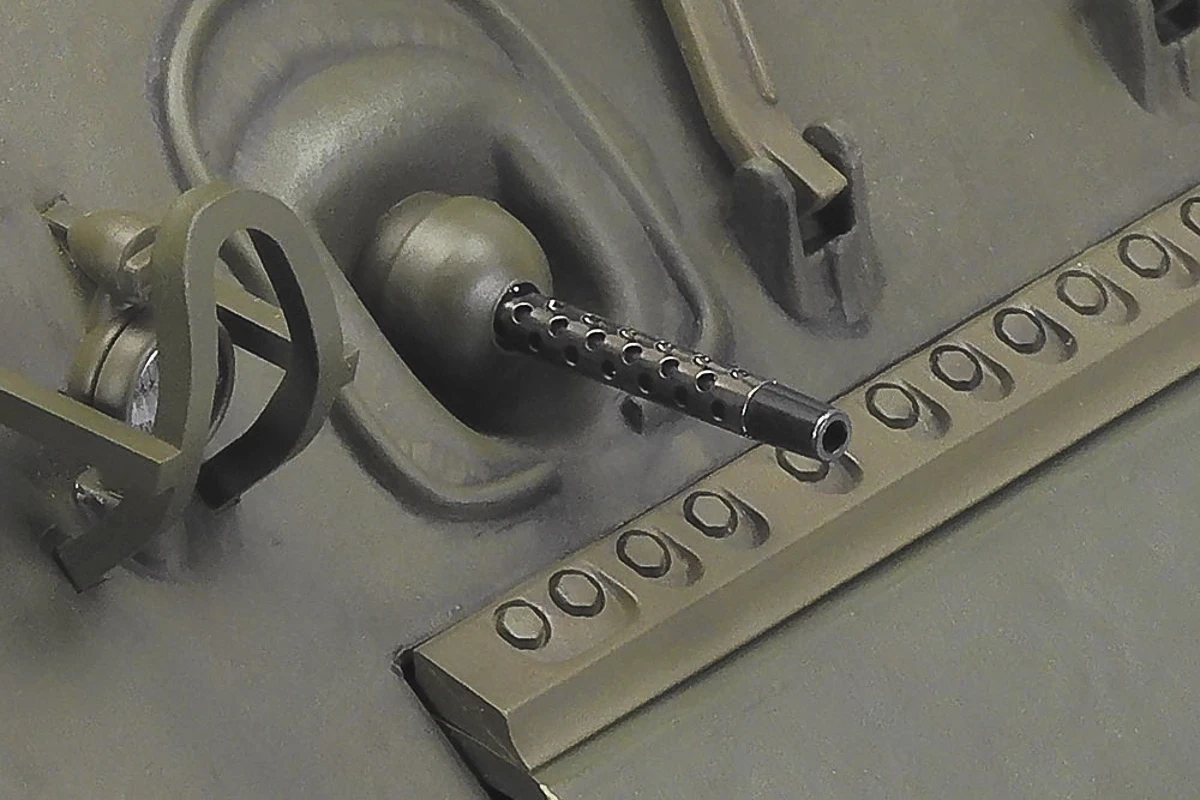
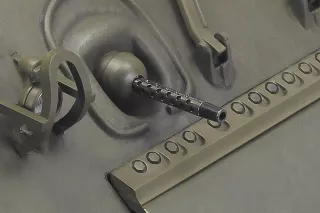
Metal barrel and cover for the hull front machine gun are separate parts for even more realism.
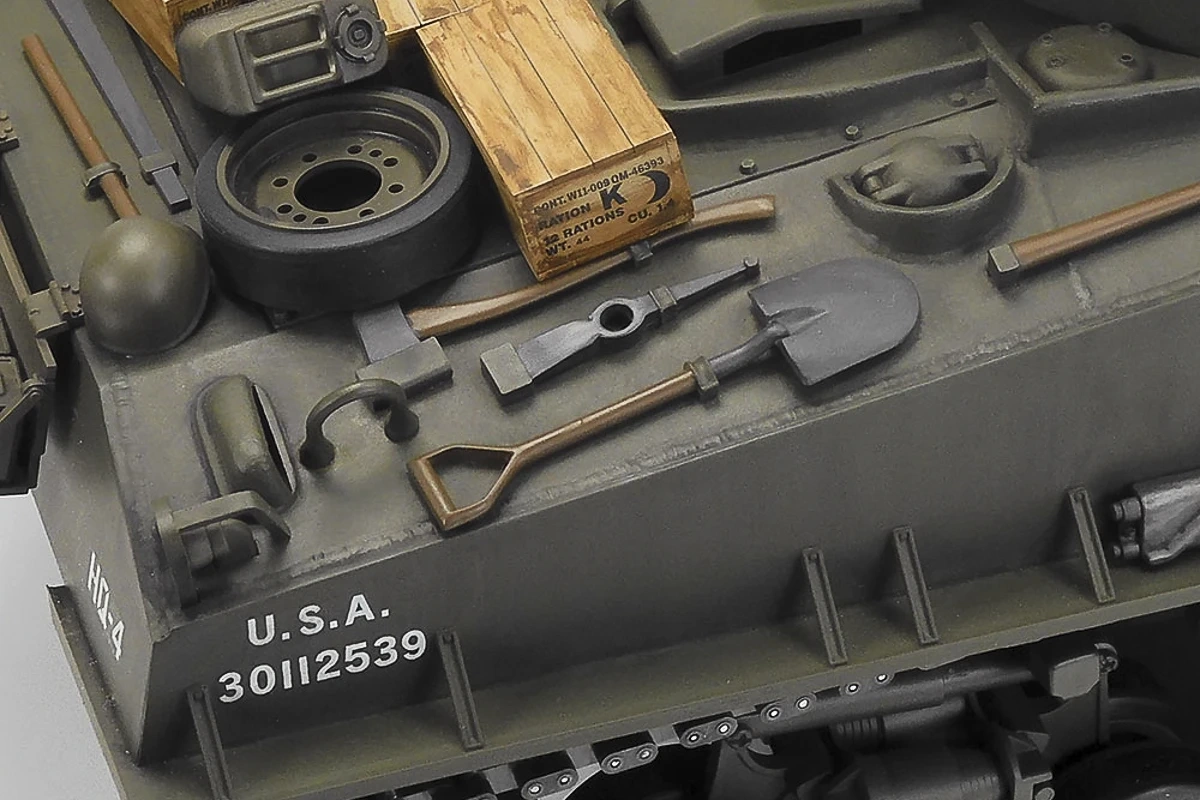
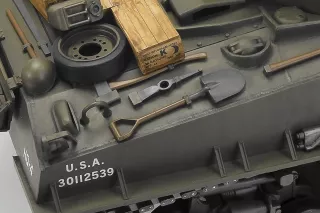
| Plenty of accessories are on hand: shovel, jack, axe and more. They are separately molded parts.
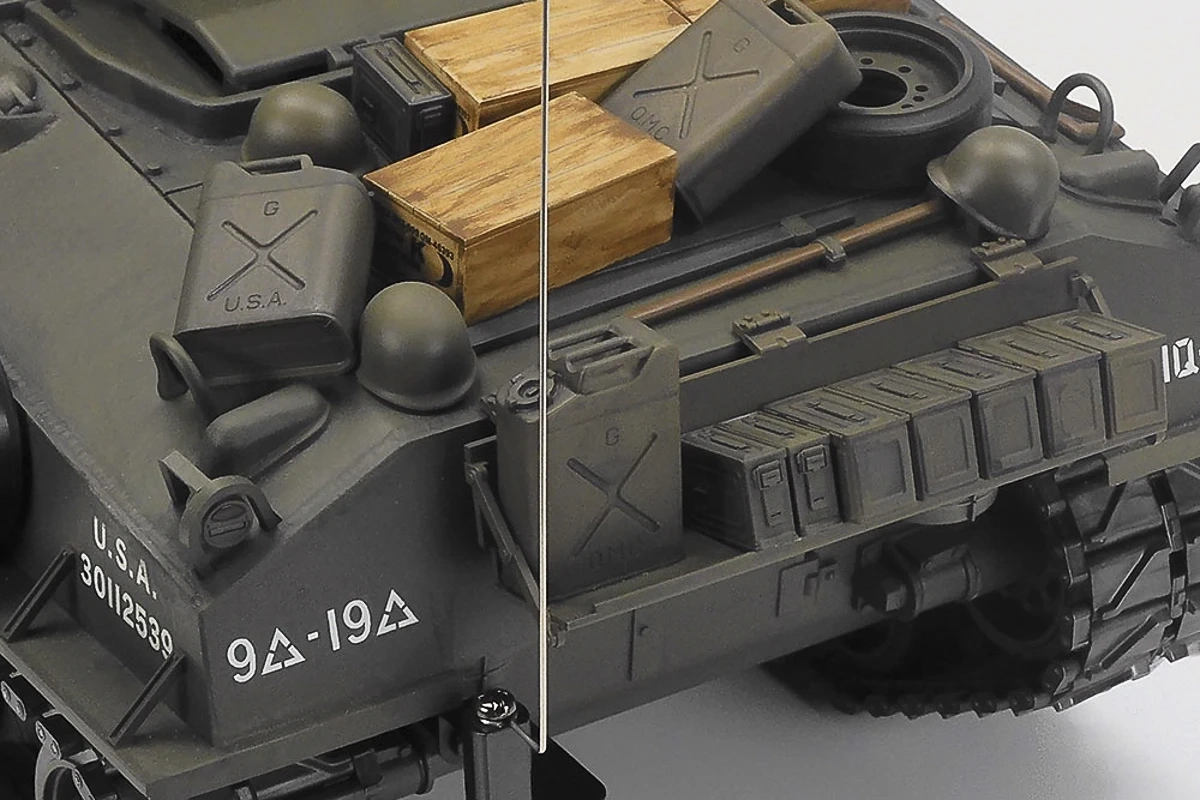
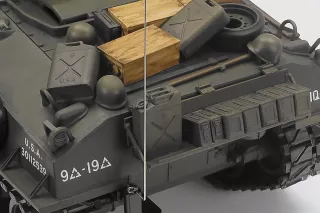
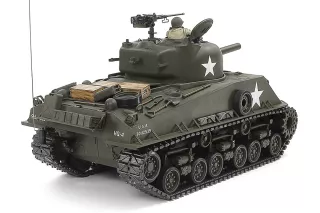
| Lots more accessories are on show here, too: from K-ration boxes to ammunition cases and Jerry cans. Decals are used for markings on the cases.
|
About the Model
• This is a 1/16 scale R/C model assembly kit. Length: 376mm, width: 183mm, height: 205mm.
• The form of the M4 Sherman is authentically captured in style. (The exterior parts are from Item 56014.)
• Updated gearbox recreates a controlled differential steering system.
• Metal components are used for drive sprockets, suspension arms and idler wheel bases.
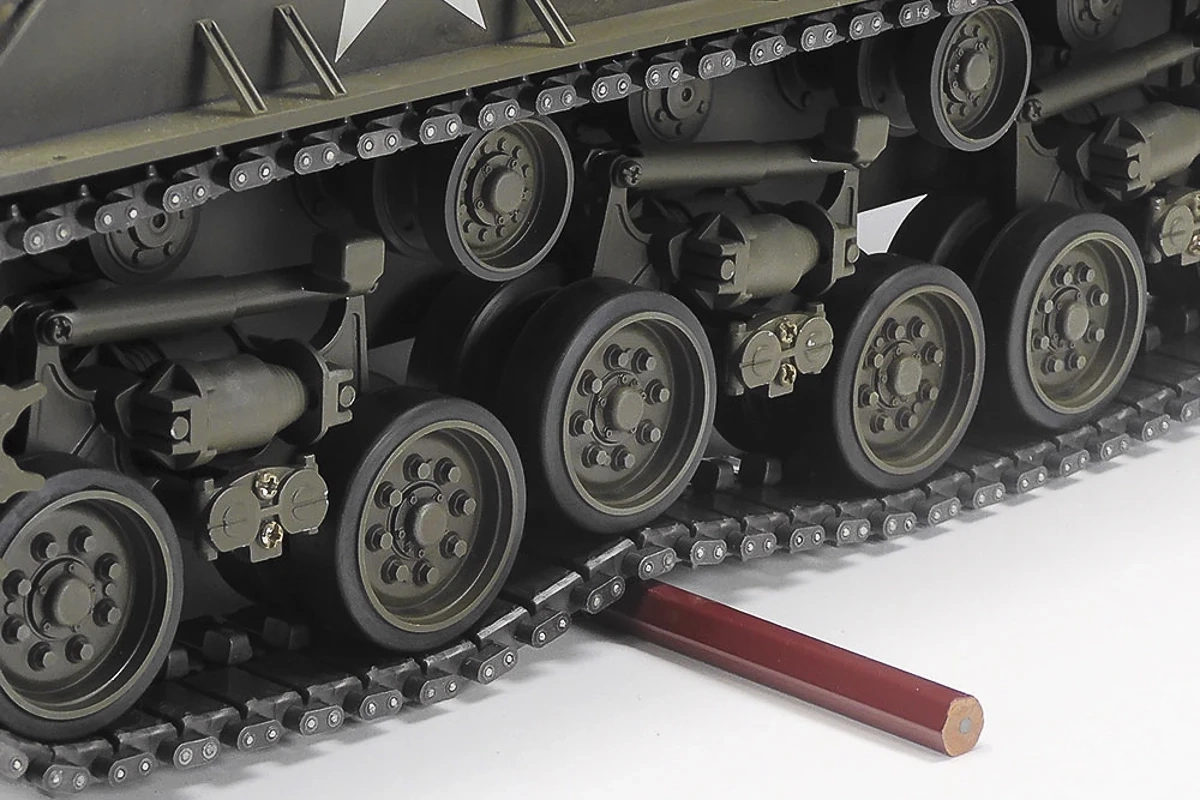
• The horizontal vertical spring suspension (HVSS) uses metal coil springs.
• One Type 540 motor is included.
• Features full ball bearings.
• Pre-assembled tracks use metal pins and connectors.
Controlled Differential Steering System
In WWII, the average tracked vehicle used a clutch brake system, whereby the sprocket on the turning side was braked to create a difference in speed between the tracks and let the vehicle turn. While it did enable pivot turns on the spot by completely stopping one track, it required considerable skill to operate, not to mention the fact that it experienced mechanical power loss and a tendency to overheat the brakes.
On the other hand, the M4 Sherman used a controlled differential system that braked a sprocket wheel via a differential gear: as the turning side track slowed, the other track sped up, leading to smooth turns and in one fell swoop both minimizing mechanical loss and negating brake overheating issues.
This system was also employed on the M24, the M8, and the M2 high speed tractor, vehicles which all contributed to the eventual success of the Allied WWII campaign.
Running performance
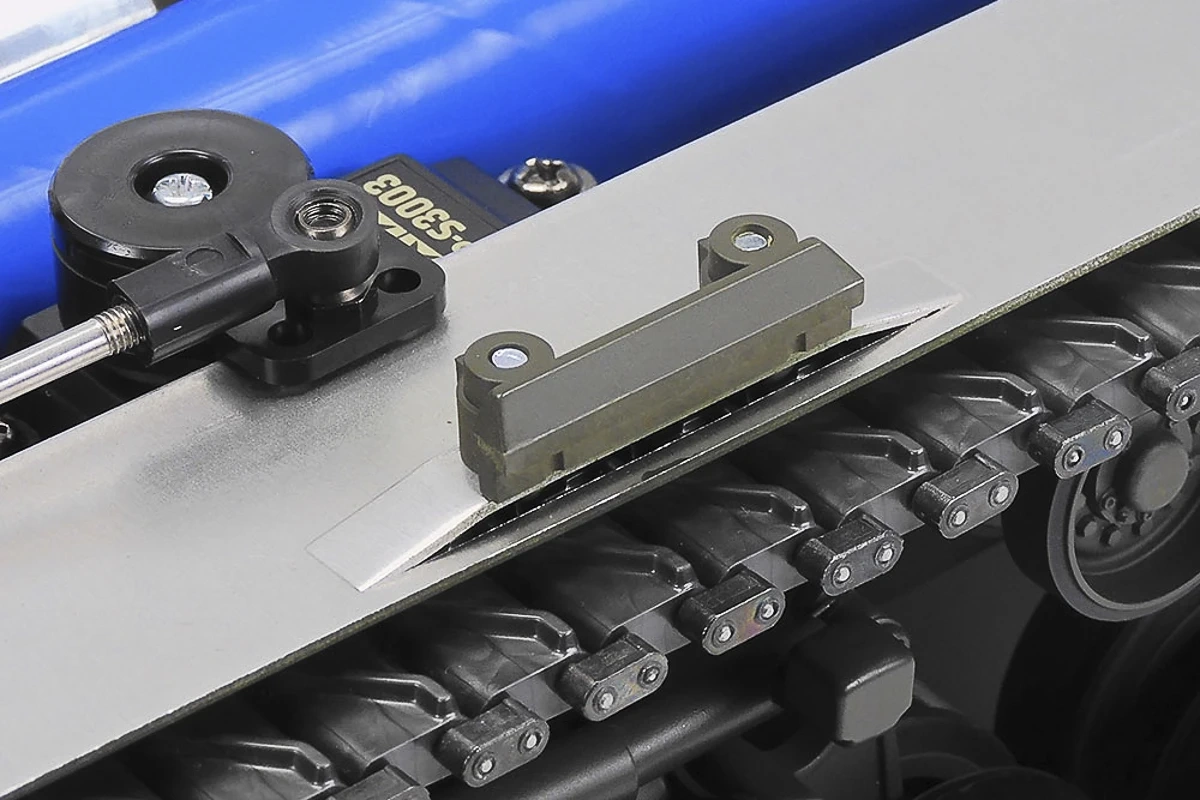
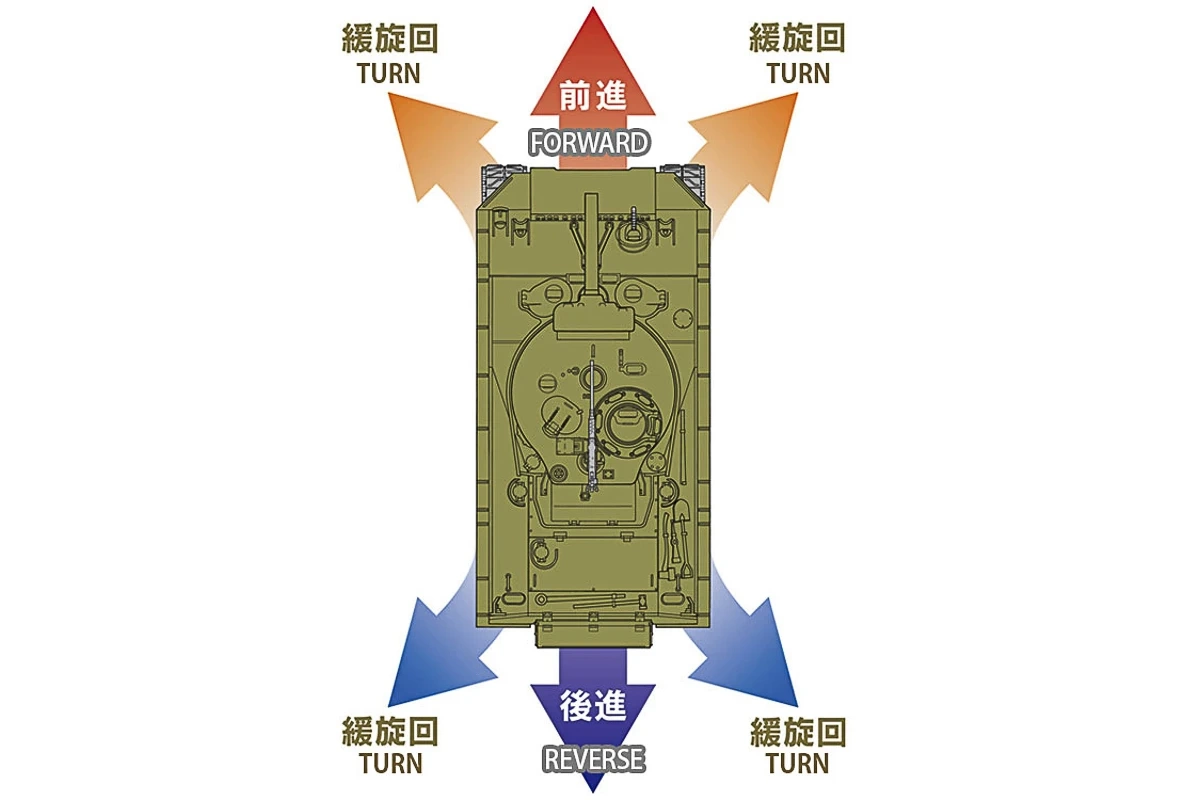
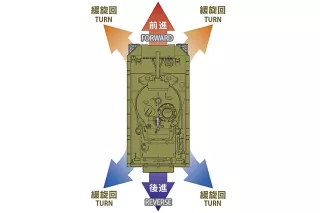
Turning circle is controlled via the steering servo and brakes. Speed control and steering operation are independent, so this tank can be controlled by a wheel-trigger type 2-channel transmitter in the same way as an R/C car is. The horizontal vertical spring suspension (HVSS) uses metal coil springs for smooth motion and ensures powerful drive, even on rough surfaces.
Controlled Differential Steering System Tech Spec Images
 |  |  |
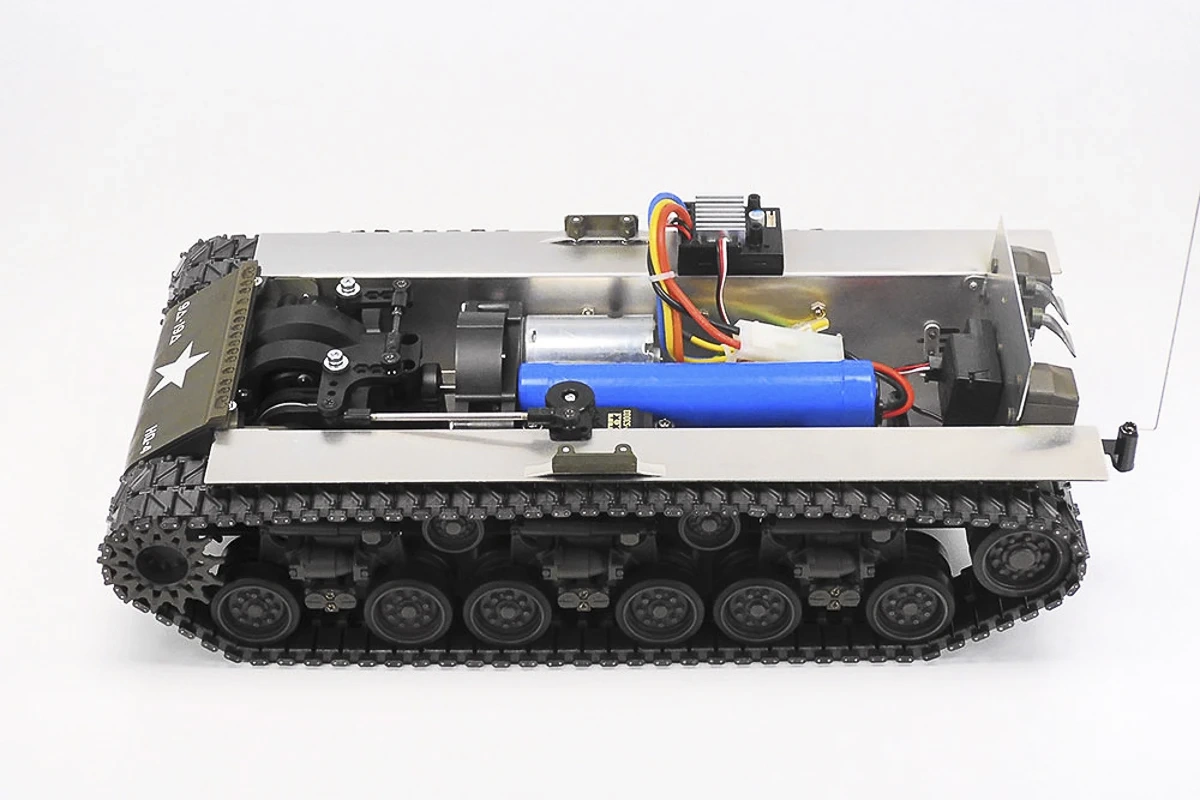
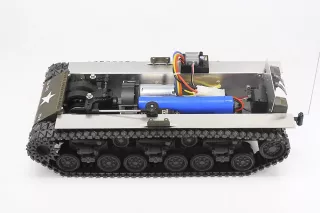
A duralumin frame gives the model excellent durability.
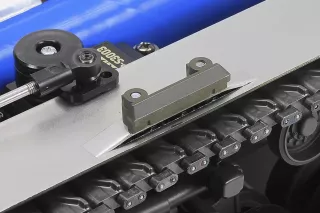
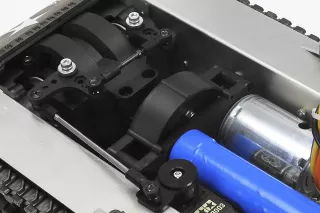
| The central battery is flanked on the right by the motor, and on the left by the servo.
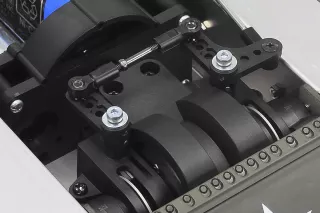
| The steering system uses a planetary differential gear in a setup close to that of the full-size tank.
|
 |  |  |
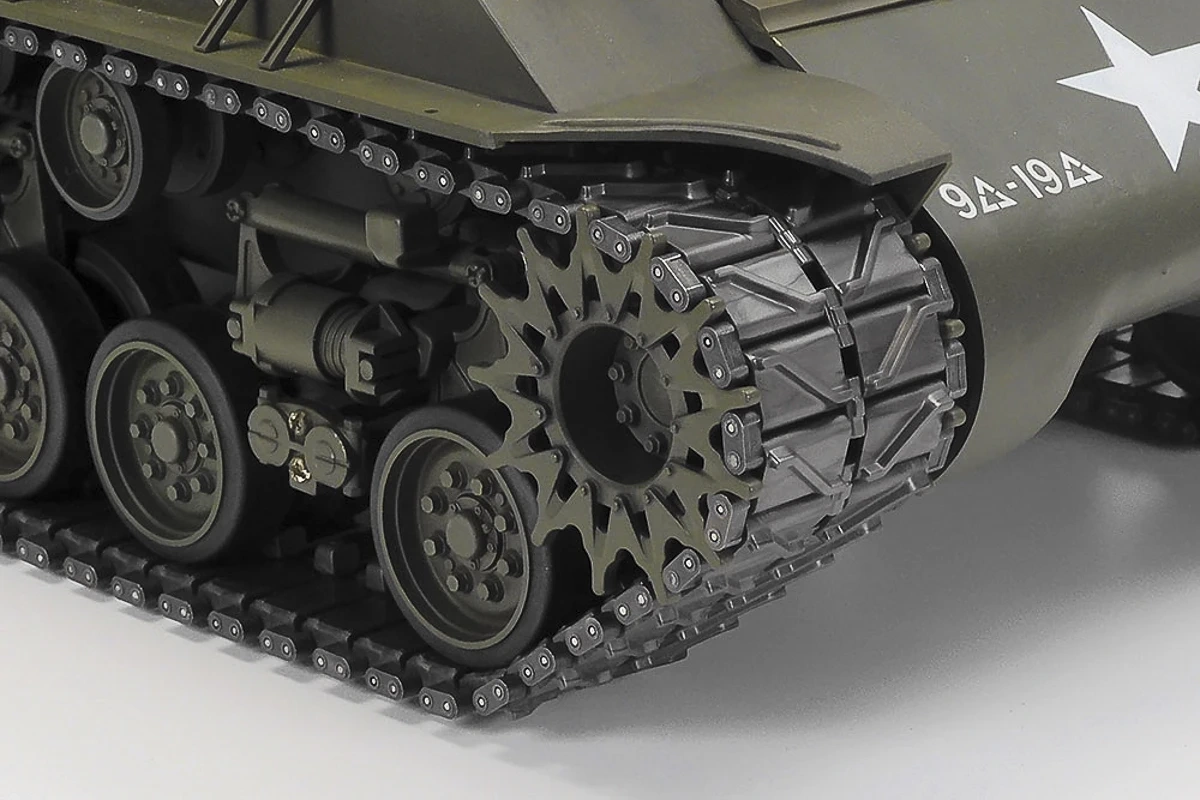
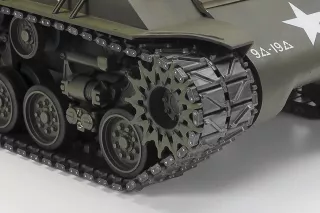
Tough plastic tracks have metal pins and connectors and come pre-assembled. The drive sprockets are die-cast components.
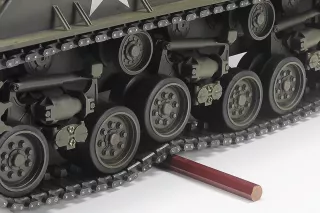
| The operational HVSS suspension uses metal coil springs.
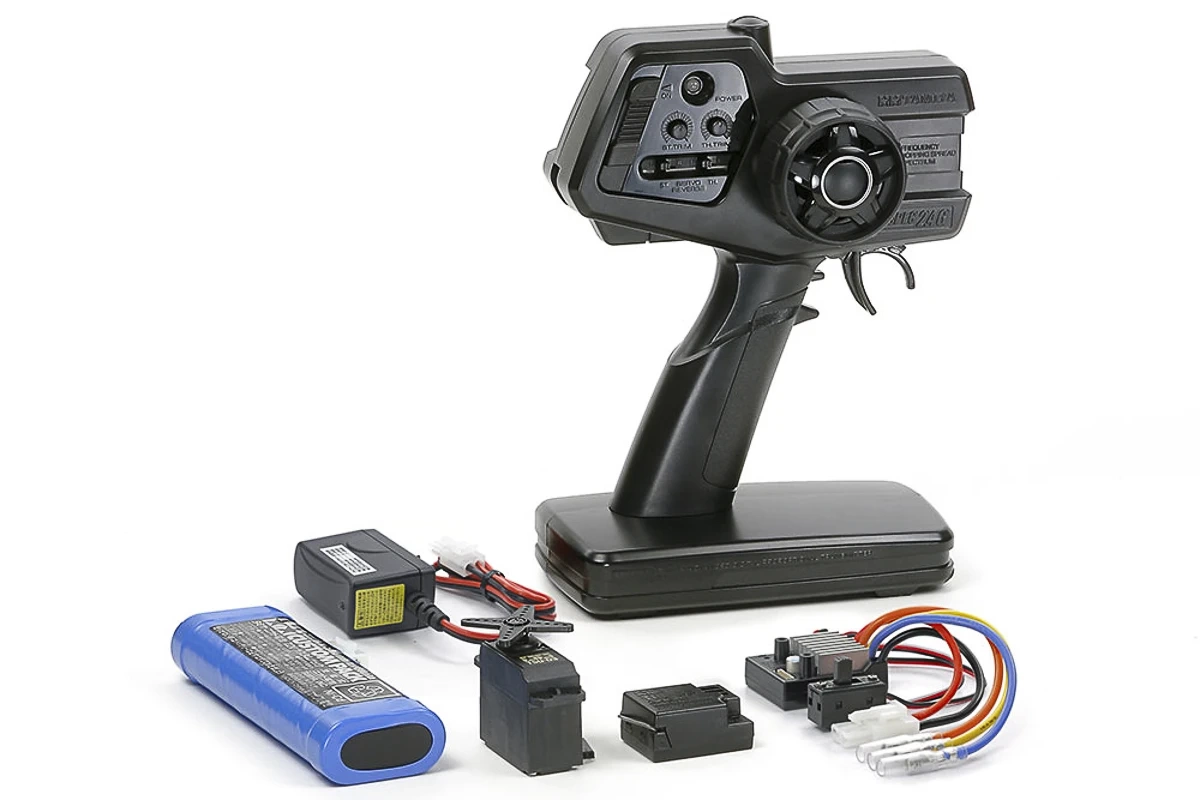
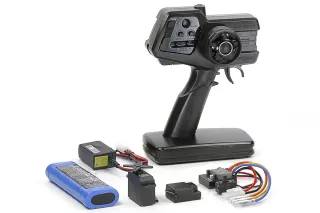
| Take control with a standard wheel and trigger type 2-channel R/C unit (sold separately)..
|